Biographies

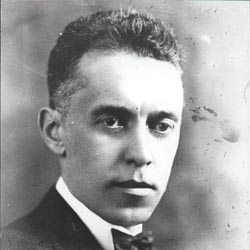
Nikolai Pavlovich Makarov (1886-1980)

Bibliography of works about N.P. Makarov

Makarov was born on December 20, 1886, in Kharkov, in a large family by city standards (he had a brother and three sisters), and his father was an employee of the Danilov Manufactory. The years of study in the secondary school were the time of his personal formation with an active life position. In his memoirs, he wrote about reading the works of K. Kautsky and K. Marx, youth clubs of the Kharkov Committee of Social Democrats and his speeches. Professors N.A. Kablukov and I.M. Goldstein were Makarov’s teachers at the Department of Economics of the Law Faculty of the Moscow University. In 1907, Makarov interrupted his studies to take part in helping the starving people in the Ufa Province, after which he decided to devote his scientific and professional life to the agricultural economy. In the summer of 1908, Makarov took part in the statistical study of the Kostroma Province. In 1909, the ungraduated economist published his first work Peasant Cooperative Movement in Western Siberia. After graduating with the first degree diploma, Makarov was invited to stay at the university for scientific work and preparation for a professorship, but in 1911, due to the repressive measures of the Minister of Education L.A. Kasso Makarov left the university. In 1911-1914, he served in the army and worked in the Statistical-Economic Bureau of the Moscow Uyezd Zemstvo. In these years, he published Credit Cooperation in the Moscow Uyezd (1912) and Dairy Cattle Breeding and Peasant Economy in the Moscow Uyezd (1913), his scientific interests became similar to those of the agrarian economists Chayanov and Chelintsev (also Makarov was a classmate and friend of Rybnikov). In June 1914, the Main Department of Land Management and Agriculture appointed Makarov a teacher of the Department of Political Economy and Statistics of the Emperor Peter I Voronezh Agricultural Institute, and from 1915 to 1918 he was the Head of this department.

In 1917, Makarov moved between Petrograd and Voronezh. After the February Revolution, instead of the director and his deputy appointed by the ministry, the staff of the Voronezh Agricultural Institute chose a board with Makarov. In his speech at the I Voronezh Provincial Peasant Congress (April 8-12), he proposed to establish a Peasant Union in the province. The congress approved the proposal and decided to borrow the program of the Union from the Party of Socialist Revolutionaries. At the same time Makarov worked in the Main Land Committee and in the Department of Agricultural Economy and Policy of the Ministry of Agriculture of the Provisional Government.

The scientific views of Makarov in this period are presented in his work Peasant Economy and Its Interests. In 1918, Makarov completed his thesis Peasant Economy and Its Evolution, but the defense was cancelled by the special decree of the Council of People’s Commissars, and the Scientific Council of the All-Russian Agricultural Institute awarded Makarov the title of professor. In 1918-1919, he taught at the Moscow University and Cooperative Institute.

In September 1919, thanks to his authority among cooperators, Makarov was offered a business trip to Siberia and then to the United States to study the activities of the board of the Union of Siberian Integrated Credit Unions (Syncredsoyuz) and the state of the Siberian credit and production cooperation. The Union had offices in Novonikolaevsk (Novosibirsk) and New York. After a risky journey through Siberia, on February 27, 1920, Makarov arrived in Harbin and then went to Vladivostok and America. Due to the refusal of the Siberian Cooperative Mission in the United States to finance his business trip, he had to earn money by giving public lectures at the People’s University and by editing articles in the Department of Agriculture of the Publishing House of the Christian Union of Young People. Before leaving Makarov wrote the manuscript Economic Foundations of Cooperative Union, the fate of which is still unknown.

In the United States, Makarov made many trips to agricultural regions, wrote the popular-science work How American Farmers Organized Their Economy and the brochure Conditions and Limits of the Use of Tractors in the American Agriculture that was published three times in Moscow in 1922-1924, and completed the work Grain Economy in North America published in Moscow in 1924. In mid-June 1922, Makarov moved to Europe, where he lived for two years – first in Czechoslovakia and then in Germany. In America and Europe, Makarov studied the economy, organization and technology of agricultural labor, which resulted in the repeatedly reprinted textbook Organization of Agriculture published first in 1924 in Berlin

After his return to the homeland in June 1924, Makarov was offered the position of the Head of Agricultural Planning Department and then of the Dean of the new Faculty of Economics of the Timiryazev Agricultural Academy. He also worked at the Research Institute of Agricultural Economics and People’s Commissariat of Agriculture.

The year 1927 marked the forty-year milestone in the life of Makarov and a milestone in the agricultural policy of the USSR. Makarov tried to justify the need for the transition to the large-scale mechanized agricultural production and machine-tractor stations, which became the focus of the new edition of his course Organization of Agriculture (1930). From this moment, all his works considered the organization of large agricultural enterprises.

In the summer of 1930, together with many colleagues Makarov was arrested and on January 26, 1932, by the verdict of the Board of the United State Political Administration he was sentenced to 8 years in prison. In 1932, at the request of N.I. Vavilov and G.I. Lomov Makarov was partially amnestied. His term in the Yaroslavl Political Isolation Ward was reduced to 5 years. When in exile in 1935-1947, Makarov worked as a planner-economist and agronomist at different state farms of the Voronezh and Rostov Regions. In January 1948, he was offered the position of the teacher at the Department of Economics and Organization of Agriculture of the Voroshilovgrad Agricultural Institute. He also returned to the scientific work – the study of economy and organization of agriculture in the Donbass. In May 1956, in Kiev, he defended the doctoral thesis on these issues, which was later published as a book. The last place of his teaching was the All-Union Correspondence Institute of Agriculture in Moscow. However, Makarov continued scientific research after retirement. In 1976, he published Industrialization of Socialist Agriculture, and his manuscript Agriculture on the Path from Capitalism to Socialism was not published. Makarov died on October 1, 1980 at the age of 93, and he was fully rehabilitated together with other economists of the organization-production school only in 1987.
Rybnikov Alexander Alexandrovich (1877-1938)

Bibliography of works about A.A. Rybnikov

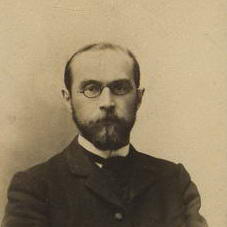
Rybnikov was born in 1877 at the Alexander-Nevsky station in the Moscow Province (according to other sources, in the city of Ryazhsk in the Ryazan Province) in an impoverished merchant family. His father was from the old merchant family of the Rybnikovs, and his mother was from the family of merchants Schukins.

After graduating from the commercial school in Moscow in 1896, for three years Rybnikov worked as an accountant at the Enzeli-Tehran road in Persia, in 1899-1902 – as an accountant in the South-Russian Industrial Bank in Moscow, in 1902-1905 – as an accountant in the Churin & Co. trading company in Vladivostok.

From 1906 to 1910, Rybnikov studied at the Law Faculty of the Moscow University, and after graduation he prepared for a professorship under the guidance of Professor N.A. Kablukov. In 1911, Rybnikov left the university in protest against the policy of the Minister of Education L.A. Kasso. In 1911-1912, Rybnikov conducted zemstvo-statistical studies of the peasant economy in the Smolensk Province. In 1911, at the All-Russian Congress of Flax Growers and at the Moscow Region Congress of Agronomic Assistance to the Population he made presentations on the development of the Russian industrial flax growing; he met Chayanov and Chelintsev, and they became the founders of the organization-production school in the agrarian-economic thought. In 1915, together with Chayanov, Maslov and Anisimov he established the Central Partnership of Flax Growers that quickly entered the Russian and world flax markets.

Since 1914, Rybnikov taught agricultural economy and statistics at the Saratov Higher Agricultural Courses that turned into the Saratov Agricultural Institute in 1917, in which in 1917-1922 Rybnikov was a professor of the Department of Agricultural Economy and Statistics. In 1917, Rybnikov worked at the League of Agrarian Reforms (as the head of its Saratov branch), at the Main Land Committee and Department of Agricultural Economy and Policy of the Ministry of Agriculture of the Provisional Government headed by Chelintsev. In 1920-1922, Rybnikov worked in the planning bodies of the Lower Volga Region and in the agricultural section of the State Planning Committee of the Labor and Defense Council, and developed measures to fight drought and restore the handicraft industry as a way to ensure the growth of the national economy.

In 1922, Rybnikov was added to the list of those who were to be expelled abroad, but at the request of the Board of the People’s Commissariat of Agriculture and deputy executive secretary of the Council of People’s Commissars his expulsion was canceled. In 1922-1930, Rybnikov taught economics and economic geography at the Timiryazev Agricultural Academy, at the first and second Moscow State University, and at the same time he led scientific research at the Research Institute of Agricultural Economy on the economic description of Kazakhstan and the Volga-Don interfluve region. Since 1926, Rybnikov worked at the section of economic geography of the Russian Association of Social Sciences Research Institutes.

On July 28, 1930, Rybnikov was arrested by the United State Political Administration in the case of the Labor Peasant Party, and on January 26, 1932 he was sentenced to 5 years in a concentration camp but was released from custody due to a mental illness (suspended sentence). After the treatment course, in 1934-1937, Rybnikov worked at the All-Union Institute of Flax in Torzhok. In June 1937, the Moscow Region Planning Committee assigned him to place the fiber flax growing in the Moscow Region in the third five-year plan.

On December 26, 1937, Rybnikov was arrested again, charged with terrorism against the leadership of the All-Union Communist Party (of Bolsheviks) and the Soviet government, and on September 16, 1938 he was shot by the sentence of the Military Collegium of the USSR Supreme Court. Rybnikov was rehabilitated on this sentence in 1963 and fully rehabilitated on the Labor Peasant Party sentence only in 1987.

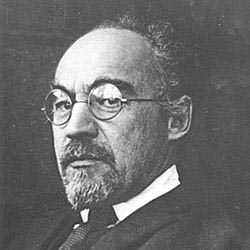
Boris (Ber) Davidovich Brutskus (1874–1938)

Bibliography of works about B.D. Brutskus

Brutskus was born on October 3 (15), 1874 in the township of Palangen in the Courland Province (today the city of Palanga in Lithuania) in the family of an entrepreneur. He graduated from the high school in Moscow with a gold medal (1891). In 1892–1894, Brutskus studied at the Medical Faculty of the University of Warsaw, then at the New-Alexandrian Institute of Agriculture and Forestry (in the New Alexandria suburb of the Lublin Province, today the city of Pulawy in Poland), from which he graduated in 1898 with a gold medal for his graduate work in physiology.

In 1899-1908, Brutskus worked as an agronomist at the Central Committee of the Jewish Colonization Society – an international organization with a branch in Saint Petersburg. He studied the economy of Jewish agricultural colonies in the south of Russia. In 1908-1917, Brutskus worked in the insurance companies – ‘Russian Transport Insurance Company’ and ‘Russia’. Since 1907, he taught at the non-governmental higher education institution – the Stone-Island Higher Agricultural Courses – and gave lectures on ‘economy and organization of the economy, agricultural policy and history of agriculture’. Brutskus gave public lectures at the Saint Petersburg Imperial Agricultural Museum and published a lot in Kharkov Journal of Agronomy. After the transformation in 1918 of the Stone-Island Higher Agricultural Courses into the I.A. Stebut Agricultural Academy and then into the Petrograd Agricultural Institute, until 1922 Brutskus was a professor of these educational institutions and taught in other universities established after the Revolution.

Brutskus interpretation of agricultural economy coincides with that of the organization-production school. During the Stolypin reforms, his views on agrarian policy changed in favor of classical liberalism – he admitted the progressive importance of private land ownership for peasants. In 1917, Brutskus criticized Narodniks in the press and opposed projects of land socialization and nationalization and of preserving the peasant community. During the ‘war communism’, Brutskus came to the conclusion of the fundamental impossibility of an effective economy based on the theory of socialism. In 1922, Brutskus published a series of articles Socialist Economy in the journal Economist, in which he criticized the ideology and practice of socialism – the journal was closed, Brutskus was arrested by the United State Political Administration and in November expelled from Soviet Russia as an enemy of the Soviet power.

Until 1935, he lived in Berlin and worked as a professor at the Russian Science Institute established by emigrants. He continued to critically analyze the national economy of the USSR under the NEP and the first five-year plan, published works in Russian, German and English. The Hitler regime in Germany forced him to move to Palestine (the British protectorate at that time), and he taught at the Hebrew University in Jerusalem for the rest of his life. Brutskus died of cancer on December 7, 1938. From the late 1920s to the late 1980s Brutskus works were banned in the USSR.

Gennady Alexandrovich Studensky (1898–1930)

Bibliography of works about G.A. Studensky

Studensky was born on December 4, 1898 in the village of Alekseevka of the Chembarsky Uyezd of the Penza Province in the family of a deacon. He graduated from the parish school, rural high school, Penza Theological Seminary (1912-1918) and Peter’s (Timiryazev) Agricultural Academy (1918-1921). In his student years, Studensky worked as a district agronomist and assistant of the head of the state farm in the Penza Province (November 1919 – May 1920). After graduating from the Academy, in which Chayanov was his teacher, Studensky was offered to prepare for teaching ‘agricultural economics’.

In 1922-1923, Studensky worked as a researcher in the Department of Agricultural Economy and Planned Work of the People’s Commissariat of Agriculture headed by N.D. Kondratiev. In 1922, Studensky led the expedition to study peasant budgets in the Penza Province. Then he worked at the Research Institute of Agricultural Economy under the guidance of Chayanov, and since 1926 he was a professor at the Samara (Middle Volga) Agricultural Institute. During his scientific trip to Germany in 1927, Studensky studied the organization of large agricultural enterprises. In 1928, he led the budget studies of peasant economies in the Samara Province. In 1929, Studensky had a long business trip to the United States to study the economics and geography of the American agriculture and processes of its mechanization, which allowed him to develop an original theory of agrarian crises.

In his early works, Studensky followed the ideas of the organization-production school and tried to combine them with the ideas of the classical economic theory (Essays on the Theory of Peasant Economy, 1923). Later he abandoned the ideas of the organization-production school. In the book Essays on Agricultural Economy (1925) based on his own statistical data on the Russian agriculture on the eve of the World War I, Studensky criticized Chayanov theory of labor-consumption balance and Chelintsev demographic theory of agrarian evolution, and denied the need for a special economic theory of peasant economy for he believed that such an economy could be fully described in the terms of market economy.

In 1927, in the journal Paths of Agriculture Studensky criticized the draft of the first five-year plan of the USSR. In the Soviet literature since the mid-1920s, the views of Studensky were qualified as bourgeois. In 1930, he was arrested on the trumped-up charges of the Labor Peasant Party and died during the investigation (according to the official version, he committed suicide in prison).

Studensky is an outstanding representative of the Russian economic thought of the 1920s. However, he remains forgotten despite about 60 scientific publications including 13 in German and English.

Page 1 of 2